The Secret to Better Leash Handling: It's About Connection, Not Control
When most people think about a leash, they think about restraint. It keeps the dog from running away, keeps them close to us, and allows us to physically control where they go. But a leash can - and should - be much more than that. I want my clients to think of the leash as a guide and a line of communication between you and your dog, rather than simply a rope you're holding onto.
This becomes especially important when working with reactive, anxious, or insecure dogs. If we learn to pay attention to what is happening at the other end of the leash, we can often feel a change in our dog before we ever see the barking, lunging, freezing, or other obvious reaction. Those subtle changes give us an opportunity to help our dogs before their emotions become too big.
Why I Like a Slip Lead
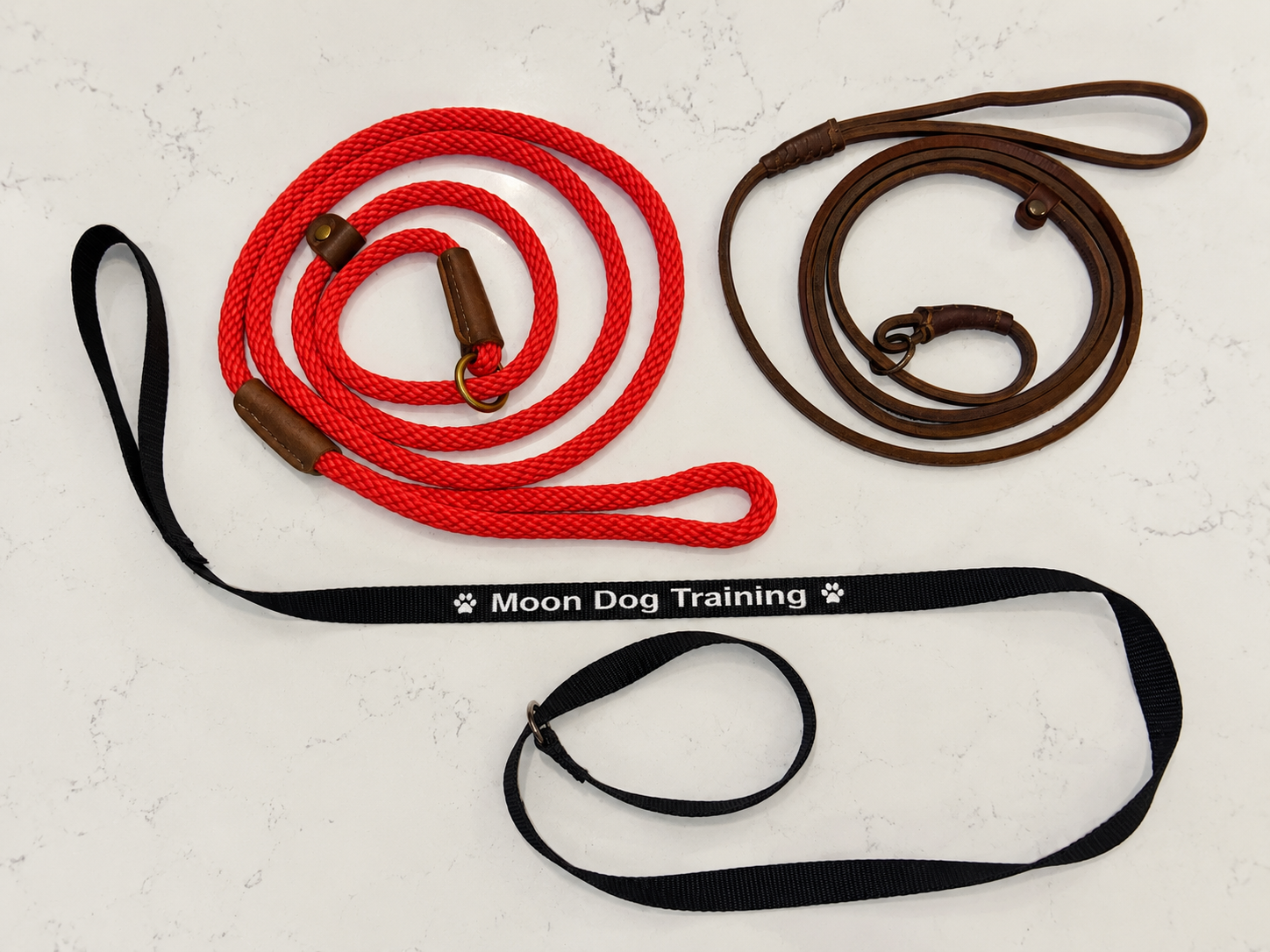
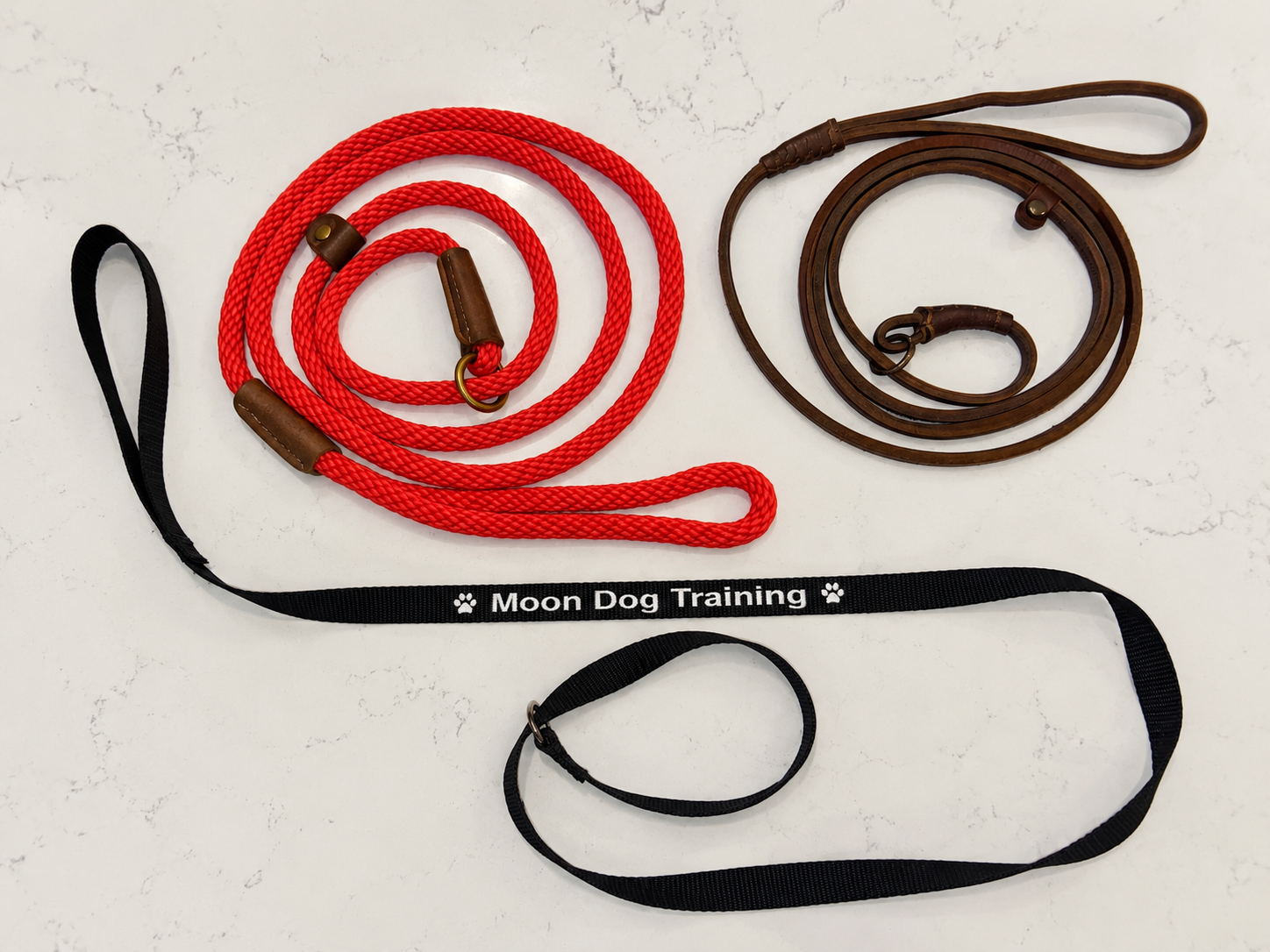
One tool I sometimes use for this purpose is a properly fitted slip lead. A slip lead combines the leash and collar into one piece and, when positioned and handled appropriately, can give the handler more direct guidance of the dog's head and direction of movement.
For a reactive dog, having the ability to calmly guide the head can be particularly useful. Many reactions begin well before the barking and lunging. The dog sees something, becomes still, stares, shifts their weight forward, and begins mentally and physically locking onto the trigger. If I'm connected to my dog and paying attention, I don't necessarily have to wait for the explosion. I can guide the dog away, change direction, create more distance, or encourage them to reorient to me.
For an insecure dog, clear guidance can also take some of the responsibility off the dog. I don't want an anxious dog walking six feet in front of me feeling like they need to make every decision about every person, dog, noise, or movement they encounter. Instead, I want the dog to learn, “I don't have to figure this out by myself. My person will help me.”
A slip lead is not intended to be used for maintaining constant pressure on a dog's neck. The goal is not to control a dog through force. The goal is to have a tool that allows us to communicate clearly and then soften the leash again when the dog responds.
Learning to “Feel” Your Dog
One of the exercises I like to do with my Reactive Rovers students is simply walk. We're not necessarily practicing a perfect heel, and we're not constantly asking for “Look,” “Sit,” or “Watch me.” Instead, I want handlers to pay attention to what they can feel through the leash.
As you're walking, notice what the leash feels like when your dog is relaxed and casually taking in the environment. Then notice what changes when your dog sees or hears something. You may feel just a tiny amount of pressure appear in the leash. Your dog's pace may change. They may begin drifting in one direction, slow down, shift their weight forward, or suddenly become very still. Then notice what happens when they relax again and that pressure disappears.
That information is incredibly valuable, especially with a reactive dog. Imagine you're walking and another dog appears across the park. Your dog hasn't barked or lunged. To someone watching, it may look like nothing has happened yet, but you can feel that something changed. A moment ago the leash was soft, and now you feel a little pressure.
When you look at your dog, you may notice other subtle changes as well. Maybe their mouth has closed, their ears have changed position, their body has become more upright, or their eyes have become fixed on the other dog. The reaction hasn't happened yet, but your dog is already communicating with you.
That's the moment I want you responding - not five seconds later when your dog is barking at the end of the leash.
The earlier we recognize those little changes, the more choices we have. We can keep moving, change direction, create more distance, or ask the dog to reorient to us. Instead of waiting for the dog to become overwhelmed and then trying to stop a reaction, we're recognizing the beginning of that emotional change and helping the dog before it gets that far.
Remember That Your Dog Can Feel You, Too
The communication through the leash goes both ways. Your dog can feel what you're doing at your end just as much as you can feel what they're doing at theirs.
Think about what often happens when someone with a reactive dog suddenly sees another dog approaching. The person becomes nervous, shortens the leash, tightens their arm, and starts pulling backward. The dog feels that change immediately. The dog puts more pressure on the leash, the handler pulls back, and pretty soon both dog and handler are contributing to the tension.
Instead, think guide and release. Use the amount of leash guidance you need to communicate what you want, and then soften again when your dog responds. The goal isn't to have a tight leash from the moment you leave the house until you get home. In fact, if there's constant pressure on the leash, it becomes much harder to notice the subtle changes that tell you how your dog is feeling.
Control doesn't have to mean force. Sometimes people hear the word “control” and assume it means being harsh with a dog, but it can simply mean that when I need to guide my dog, I can. That's especially important with reactive and insecure dogs.
If your dog is becoming overwhelmed by another dog approaching, standing at the end of a six-foot leash staring at that dog isn't necessarily helping them. I want to be able to calmly communicate through my movement and the leash, “We're going this way,” and then go. There doesn't need to be an argument, frantic leash jerking, or repeatedly saying “Leave it!” Clear, calm guidance can give the dog the information they need.
A Loose Leash Doesn't Mean an Absent Handler
We absolutely want a loose leash whenever possible, but sometimes people interpret “loose leash” as meaning the handler shouldn't communicate through the leash at all. That's not what I'm looking for. There can be softness without disconnection.
Think about holding someone's hand. You don't need to squeeze their hand constantly to know they're there. But if you're walking together and they gently change direction, you can feel it. That's much closer to what I want the leash to become. Most of the time it should be soft and relaxed, but when communication is necessary, you should be able to use it gently and deliberately and then return to that softness.
This is also why I encourage people to practice when nothing exciting is happening. Don't wait until another dog is coming down the sidewalk to start learning what your dog feels like through the leash. Walk around your yard, inside your house, an empty parking lot, or a quiet park and simply pay attention.
Learn what your dog feels like when they're relaxed. Notice the difference when they're sniffing, when their attention shifts, or when something in the environment catches their eye. See if you can tell without even looking when they've started putting pressure into the leash. Practice gently changing direction and having your dog follow you without needing to pull them along.
The more familiar you become with what your dog's relaxed, normal state feels like, the easier it becomes to recognize those subtle changes when they're starting to become uncomfortable.
The Goal Is Connection
Good leash handling isn't about overpowering your dog. It's about becoming more aware of them and developing better communication between the two of you.
With practice, the leash becomes less like something you're simply holding onto and more like a quiet conversation between you and your dog. You begin noticing the tiny changes that happen before the big behaviors. You feel your dog become tense, and you feel them soften again. You recognize when they're beginning to struggle and can step in to help before they become overwhelmed.
For reactive dogs in particular, those few seconds can make an enormous difference. Instead of constantly reacting to your dog's reactions, you begin recognizing what is happening before the reaction occurs.
So the next time you take your dog for a walk, don't just hold the leash. Pay attention to it. Learn what your dog feels like through that connection, and remember that your dog is feeling you at the other end, too.
The leash should be a guide and a line of communication, not simply a rope you're holding onto. The better we become at listening through that leash, the better we become at helping our dogs navigate the world with us.
What to look for in a slip lead
The thinner the better. Get the thinnest lead that can still safely accommodate your dogs size and strength. I'd also get a short leash. This isn't meant for loose-leash walks and sniffing, this is a training tool. You're going to be holding the leash fairly close to your dogs head (depending on the size of your dog).