“Don't You Even Want to Meet My Dog?”
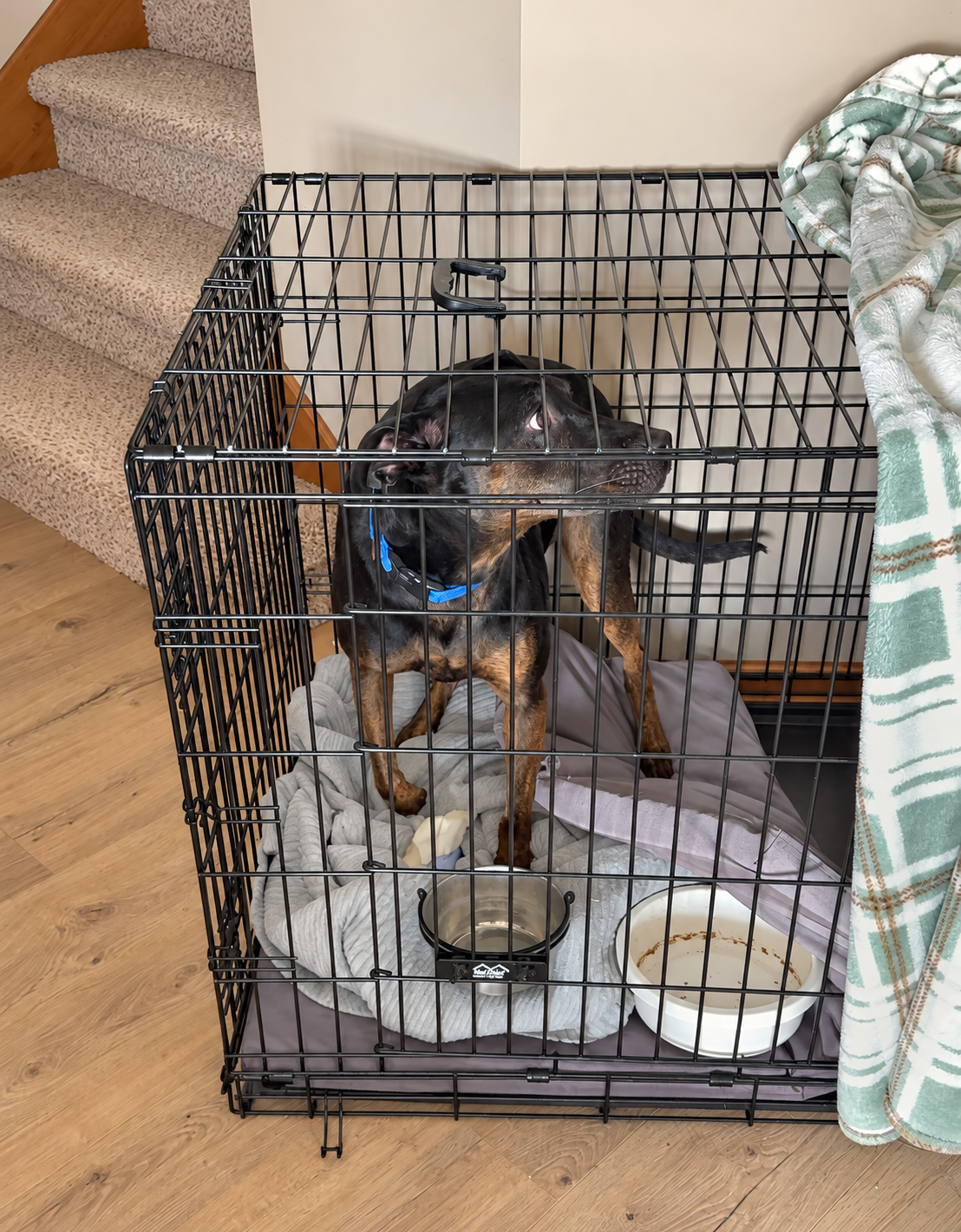
Sometimes when I arrive at someone's home for a private lesson, I ask that their dog be in a crate before I come inside. And believe it or not, I can learn an awful lot about a dog without ever seeing them!
Watching - or listening - how a dog responds to having a stranger in their home, especially when they can't immediately greet that person, tells me quite a bit. Do they settle after a few minutes? Do they bark or whine intermittently? Do they become increasingly frustrated because they can't get to me? Can they relax and simply exist while something interesting is happening around them?
All of these behaviors give me valuable information about a dog's emotional state, impulse control, and frustration tolerance.
Frustration tolerance is a dog's ability to handle not getting what they want, when they want it. Some dogs have very little of it! They want to greet the visitor, and they want to do it NOW. When they're prevented from doing so, they bark, whine, paw at the crate, or become increasingly worked up. Other dogs may be barking because they're uncomfortable or worried about the stranger in their home. Learning to recognize the difference is an important part of my job.
Sometimes We Bring the Dog Out. Sometimes We Don't.
During many private lessons, we bring the dog out and work on whatever challenges the owners are having. Maybe we're practicing walking nicely on leash, learning not to chase the family cat, or working on appropriate greetings.
But sometimes, I make the decision that the dog isn't coming out of the crate during that lesson.
And there's a reason for that.
If a dog has spent much of the lesson barking, whining, or demanding to be let out, opening the crate and allowing them to rush over to greet me may teach them that persistence pays off. All that noise and frustration eventually got them exactly what they wanted!
Of course, not all barking or whining is demanding behavior. Some dogs are genuinely distressed, and in those situations, we need to address the underlying emotion rather than simply wait for silence.
But when frustration is the issue, one of the most valuable things we can teach a dog is that they don't always get to do what they want, and that's okay.
Sometimes the lesson is simply learning to settle while life happens around them.
We Have to Build the Foundation First
Other times, I choose not to bring a dog out because I don't believe they're ready to practice greeting people yet.
If a dog struggles with basic impulse control, can't disengage from distractions, or has difficulty responding to their owner when excited, putting them face-to-face with a stranger may be asking far too much.
Before we work on greetings, I may want the owners practicing some core skills at home. Things like looking to their owner for direction, waiting for things they want, responding to simple cues, and learning to relax without constant interaction.
These may sound like little things, but they're the foundation for everything else. If a dog can't pause and pay attention to their owner in the living room when nothing exciting is happening, how can we expect them to do it when a stranger walks through the front door?
Training isn't about seeing how much a dog can handle. It's about setting them up to be successful.
“But Don't You Even Want to MEET Him?”
This is probably one of the hardest things for owners to understand.
Occasionally, someone will look at me in disbelief and say, "Don't you even want to MEET him?"
Of course I do! I love dogs. I've spent over 30 years working with them!
But my response is usually something along the lines of, "I'd love to meet him, but I'm not going to do that right now because he's telling me he's not ready."
And sometimes, I think the owner's desire for their dog to meet me is actually part of the bigger picture. We humans love having our dogs greet people. We want them to be friendly, social, and included in everything. But not every dog needs to meet every person, and not every situation needs to end with a greeting.
Sometimes we're so focused on what we want our dogs to do that we overlook what they're actually capable of doing in that moment.
A dog who is overexcited, frustrated, or uncomfortable doesn't necessarily benefit from being brought into an even more challenging situation. In fact, doing so can reinforce unwanted behaviors or make an already difficult experience worse.
Sometimes NOT Meeting the Dog Is the Best Training Decision
I don't need to see a dog jump on me to know they have a jumping problem. I don't need to watch a dog lunge at a visitor to believe the owner when they tell me that's what happens. And I certainly don't need to push a dog beyond their comfort level just to demonstrate a behavior we're trying to change.
My job isn't to get the dog out of the crate at all costs. My job is to understand what's happening, teach the owners how to change it, and develop a plan that sets everyone up for success.
Sometimes that means working directly with the dog. Other times, it means spending the lesson teaching the humans what they need to practice before the dog is ready for the next step.
And yes, sometimes the dog stays in the crate for the entire lesson.
Just because a dog CAN come out of the crate doesn't mean they SHOULD.
Remember, successful training isn't measured by how much we accomplish in a single session. It's measured by whether we're helping the dog develop the skills they'll need to be successful in the future.
Sometimes the most productive thing I can do during a private lesson is NOT meet the dog.
And that's perfectly okay.
— Giene
Moon Dog Training