Introducing Two Dogs: How to Set Them Up for Success
Bringing a second dog into your home can be exciting, but whether the dogs become best friends, peaceful roommates, or simply learn to coexist comfortably depends on many factors. Age, temperament, play style, past experiences, social skills, and individual preferences all matter.
There is no single introduction that can guarantee two dogs will be compatible, but we can make those first interactions as comfortable and low-pressure as possible. The goal shouldn't be to make the dogs immediately like each other. Instead, we want to give them time, space, and choices while paying close attention to what both dogs are communicating.
Start on Neutral Territory
Whenever possible, introduce the dogs somewhere neither dog considers his or her territory. A quiet park, open grassy area, or other neutral location can work well. Avoid busy dog parks, pet stores, narrow sidewalks, or other places where the dogs may already be excited, overwhelmed, or unable to create distance.
And don't start by immediately walking the dogs straight toward one another for a nose-to-nose greeting. Give them some time to simply exist around each other first. For many dogs, being expected to immediately interact with an unfamiliar dog creates unnecessary social pressure.
Start With a Parallel Walk
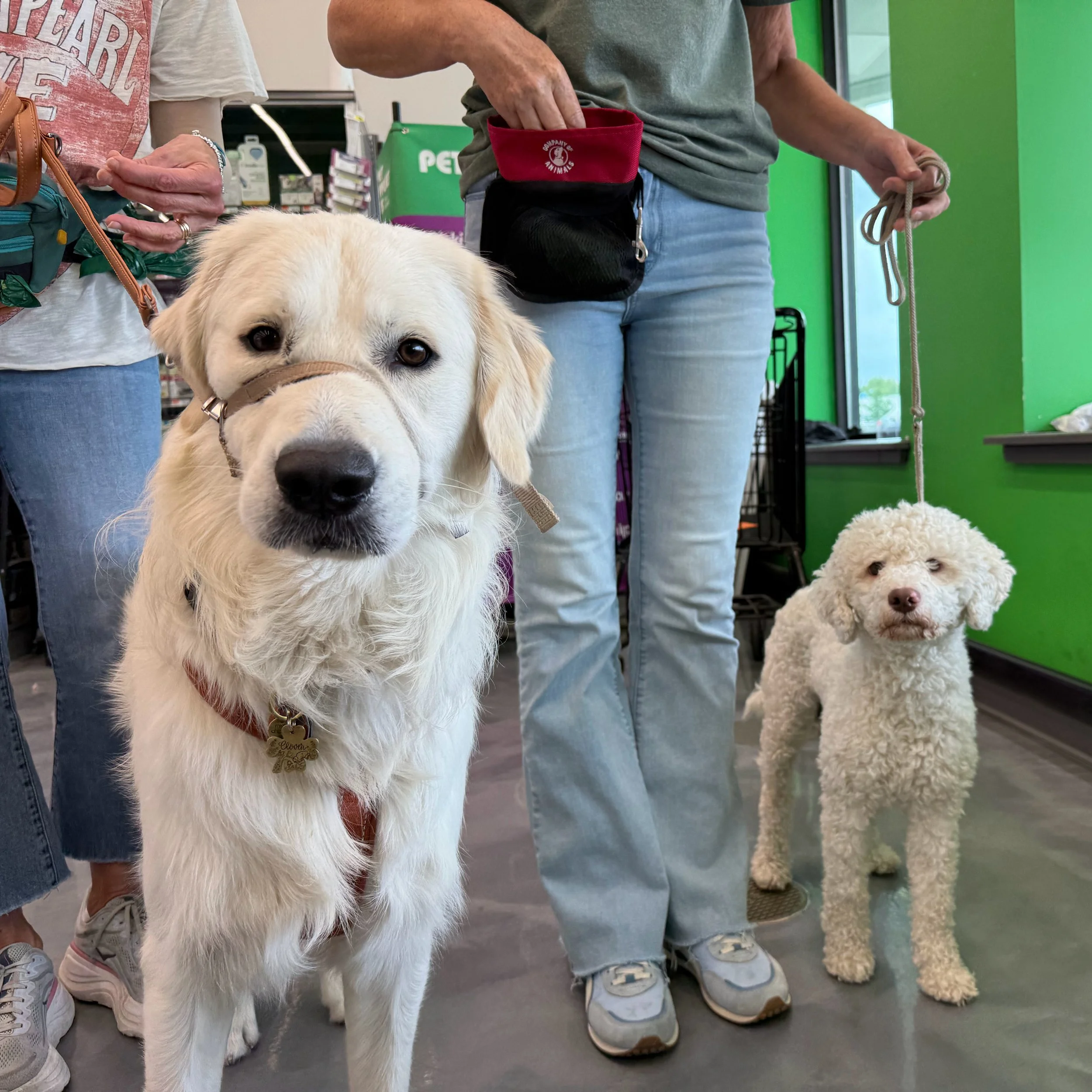
One of my favorite ways to introduce dogs is through parallel walking. Begin with two handlers and enough distance between the dogs that both can walk comfortably. They don't need to interact yet. Let them sniff, explore, and become aware of one another without the pressure of a greeting.
As long as both dogs remain relaxed and comfortable, you can gradually decrease the distance between them. Think of it as, "We're going for a walk together" rather than "You two need to meet." This gives the dogs an opportunity to gather information about one another while still having plenty of space.
Keep Those Leashes Loose
Tight leashes can completely change an interaction. When we tighten a leash, we restrict a dog's ability to move naturally, curve away, investigate, or create distance. Leash tension can also contribute to frustration and make an already uncertain dog feel trapped.
Keep enough control to maintain safety, but whenever possible, allow the leash to remain loose. This is another reason parallel walking is so helpful. Instead of standing still while two dogs investigate each other at the ends of tight leashes, everyone is moving naturally in the same direction.
Don't Force the Greeting
Your dogs don't need to immediately sniff noses, play, or become friends. If one dog turns away, moves behind the handler, sniffs the ground, or creates distance, let them. Those choices are valuable communication.
A dog saying, "I'm not ready to get that close" isn't being stubborn or antisocial. In fact, allowing that dog to move away may make a successful interaction much more likely. When dogs learn that they have the ability to create distance instead of being forced into an interaction, they often feel safer.
Watch the Whole Dog - Not Just the Tail
A wagging tail does not automatically mean a happy or friendly dog. Tail movement tells us that a dog is emotionally aroused or engaged, but we need to look at the rest of the body to understand what that means.
Loose, wiggly body movement, soft facial muscles and eyes, a relaxed or open mouth, curved approaches, play bows, and the ability to sniff and then comfortably disengage are all things I like to see. During play, I also want to see give-and-take between the dogs rather than one dog continually chasing, pinning, or overwhelming the other. One of the best signs is when the dogs voluntarily separate and then both choose to come back for more.
On the other hand, freezing, hard staring, a stiff upright posture, a suddenly closed mouth, repeated attempts to move away, hiding behind the handler, or one dog relentlessly following the other are signs that we should create more space. Growling, snarling, or snapping are even clearer indications that a dog is uncomfortable. Don't evaluate one isolated behavior, look at the entire dog and the context in which the behavior is happening.
Yes, You Can Praise and Reward Your Dog
Older training advice sometimes warned people not to praise a dog during an introduction because you might accidentally reward a growl or other unwanted behavior. That's not how I approach introductions.
If your dog looks at the other dog and remains calm, checks in with you, walks nicely, disengages appropriately, or makes another good choice, reinforce it! Food can be extremely useful during introductions when used thoughtfully. We're not trying to distract the dog into pretending the other dog isn't there; we're helping create positive associations while reinforcing the behaviors we'd like to see again.
Keep the First Interaction Short
More isn't always better. If the dogs have walked together successfully, briefly investigated one another, and everything looks good, it's perfectly okay to stop there.
Ending while things are going well is much better than continuing until one dog becomes tired, overstimulated, frustrated, or annoyed. You can always give the dogs another opportunity to interact later. A series of short, successful experiences is much more valuable than one long interaction that eventually falls apart.
Bringing the New Dog Home
A successful meeting on neutral territory doesn't mean the dogs should immediately have unlimited access to one another once you get home. This is where management becomes incredibly important.
Baby gates, crates, exercise pens, separate rooms, and leashes can all help you give the dogs appropriate breaks from each other. Initially, I also recommend feeding separately and being thoughtful about high-value chews, toys, food, favorite sleeping spots, and even attention from people. You're still learning about the relationship between these two dogs, so there's no reason to create unnecessary opportunities for conflict.
Your Resident Dog Needs Breaks
This is especially important when bringing home a puppy because puppies can be a lot. Your adult dog shouldn't be expected to entertain, babysit, or continually correct the new puppy. If your resident dog tries to walk away and the puppy follows, that's a good time for you to intervene and redirect the puppy.
Give your resident dog plenty of puppy-free time, individual attention, and access to places where the puppy cannot bother them. At the same time, I don't think of this as the resident dog having "seniority" and the puppy needing to earn privileges. Instead, think about meeting each dog's individual needs and managing the environment so neither dog is continually placed in uncomfortable situations.
Don't Punish the Growl
A growl is communication. It's your dog's way of saying, "I'm uncomfortable," "That's too much," or "Please give me some space." We want to listen to that information.
Punishing a growl doesn't necessarily change how the dog feels about the situation. Instead, it can teach the dog that giving a warning gets them in trouble. Calmly create some distance and consider what caused the discomfort. We want dogs who communicate with us, and ideally, we want to recognize the earlier, more subtle signs of discomfort before the dog ever feels the need to growl.
Don't Expect Instant Friendship
Some dogs immediately click. Others need days or weeks to become comfortable with one another. And some dogs may never wrestle, cuddle, or sleep together - and that's okay. Successful multi-dog households don't require dogs to be best friends.
Our goal is for both dogs to feel safe and comfortable in their home, have their needs respected, and learn how to peacefully share their lives with one another. Slow introductions, thoughtful management, and paying attention to what each dog is communicating can go a long way toward creating that relationship.
Most importantly, don't rush it. Giving dogs time, space, and choice at the beginning can help build a much stronger relationship in the long run.